
Spring Trapping, Kiwi and Preparing for Summer
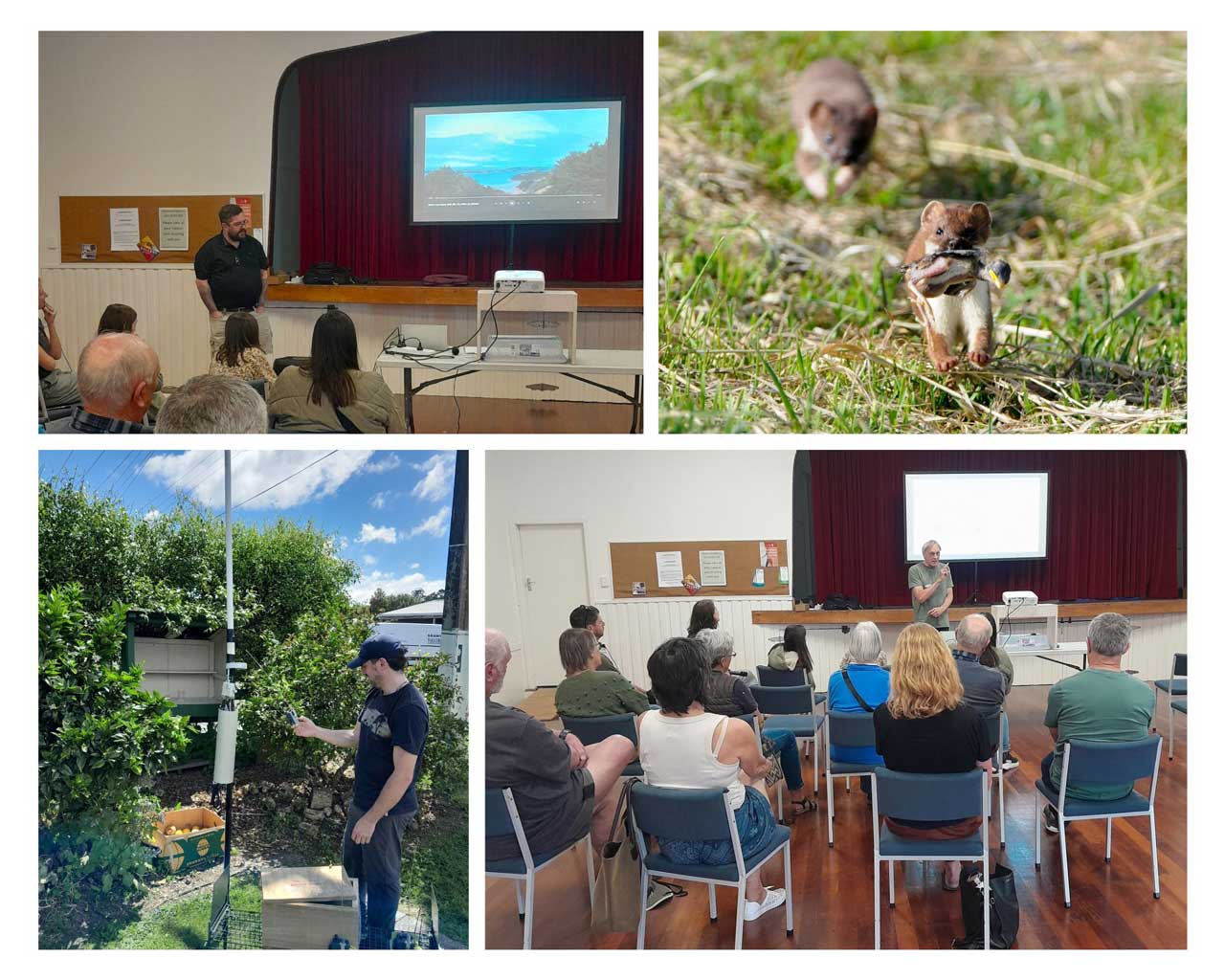
Local residents gathered on a sunny Sunday afternoon in October to share conservation knowledge, explore new predator control technology and discuss how to protect kiwi as summer approaches.
Hosted by The Forest Bridge Trust, the afternoon brought together people already doing their bit for local conservation, with discussions ranging from spring trapping and kiwi dispersal to community collaboration and emerging technology. A special highlight was a private screening of Stoat’s Last Stand, a short film by Auckland filmmaker Aaron Cluka.
The Trust’s Conservation Manager, Matu Booth, shared insights into kiwi behaviour and dispersal, prompting plenty of questions from attendees. Kiwi can turn up in unexpected places, reinforcing the importance of looking after them across the wider landscape, not just in areas where they are already well established.
With a hot, dry summer expected, the group also discussed how residents can help protect kiwi through the warmer months and raise awareness among visitors that they are sharing the area with native wildlife.
Connecting communities for conservation
The conversations extended beyond individual properties to the importance of working together across the landscape. Some attendees raised concerns about nearby council land where predator control or land management appeared to need more attention.
The Forest Bridge Trust works alongside landowners, community groups and agencies, helping people make connections and find practical ways forward. Where concerns arise about neighbouring council land, the Trust can help connect residents with the appropriate local council ranger to open a conversation.
Attendees also explored the potential for Celium technology to support local predator control networks, with interest in how the equipment might help groups coordinate their efforts. The Trust welcomes enquiries from local groups interested in learning more or discussing a potential network in their area.
Another topic was Maramataka, the Māori lunar calendar, and whether predator activity and sightings vary across different moon phases. The Trust records wildlife observations through some of its monitoring work, including camera monitoring at Tamahunga, and welcomes conversations with people interested in exploring the information available.
A film to spark conversation
The afternoon concluded with a special screening of Stoat’s Last Stand, giving attendees an opportunity to hear more about the work of local filmmaker Aaron Cluka and discuss the challenges of protecting native wildlife. The film sparked positive conversations and provided another way to connect people with the conservation work happening in their own backyards.
Find out more about Aaron’s work at cluka.nz.
Keeping up the trapping effort over summer
As summer approaches, maintaining regular predator control remains important. Stoats begin dispersing during this period, making November through to early March a key time to keep traps operating and check them frequently.
Where possible, aim to check traps weekly over this period. A simple way to build the habit into your routine is to check your traps whenever you put your rubbish bins out.
Every trap checked and every connection made between neighbours helps strengthen the wider community effort to protect Aotearoa’s native wildlife.
The Forest Bridge Trust thanks everyone who attended, shared their knowledge and contributed to the discussion. If you would like to find out more about community trapping, Celium technology or protecting kiwi in your area, contact community@theforestbridgetrust.org.nz.