
Backyard GainsConservation in Action brings the community together in Matakana
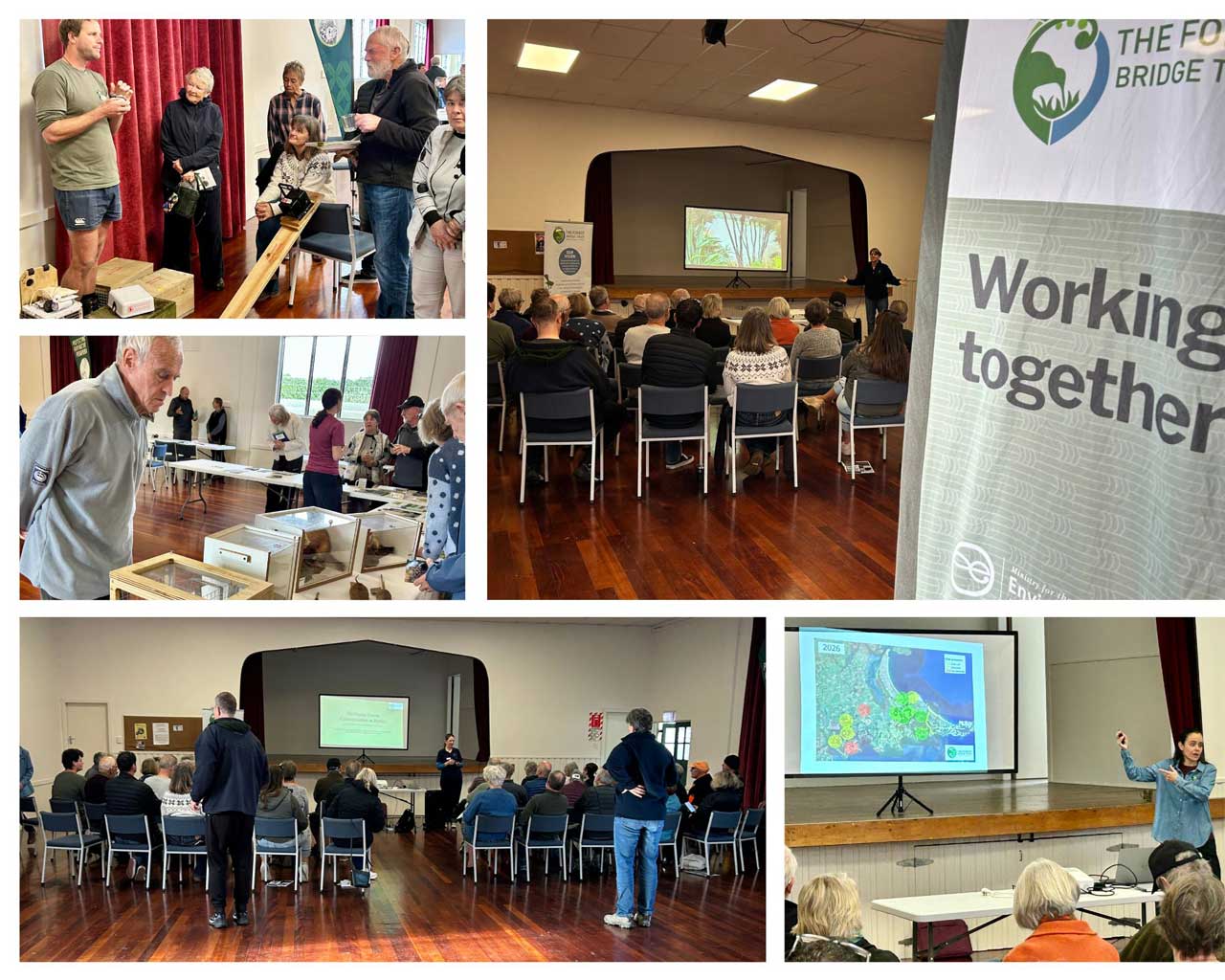
On a wet June morning in Matakana, more than 60 people gathered for Backyard Gains: Conservation in Action, a chance to connect, share knowledge, and celebrate the conservation gains being made across our region.
Held around the Winter Solstice, the morning was a reminder that conservation doesn’t slowdown in winter. Across Rodney and Kaipara, landowners, community groups, and conservation teams continue to protect native species, restore habitats, and create healthier ecosystems for the future.
The event gave The Forest Bridge Trust team an opportunity to share updates from across our mahi, from kiwi monitoring and pekapeka research to wetland restoration, predator control, and practical support for landowners.
Encouraging signs for kiwi and pekapeka
Forest Bridge Trust ecologist Dr Virginia Moreno shared early results from the 2026 kiwi call count monitoring, with plenty of kiwi duets recorded an encouraging sign that breeding pairs are present across the landscape.
Virginia also looked back over the results from previous years of kiwi call monitoring, highlighting the positive trend being seen across the wider kiwi recovery landscape. It was fantastic to see year-on-year increases in kiwi calls within the buffer zones around Tawharanui and Mataia, with more kiwi duets being recorded each year, a promising indication that kiwi are pairing up and successfully establishing territories.
While the 2026 monitoring season is still underway, the team is looking forward to seeing what the results reveal once the monitoring season is complete.
These results also reinforce the importance of ongoing Kiwi Avoidance Training for local dog owners. With kiwi increasingly recorded across a wider area, including buffer zones around established populations, it is a timely reminder that you never quite know where a kiwi might be moving through the landscape. Keeping dogs trained and alert to avoid kiwi scent is a key part of ensuring these birds stay safe as their populations continue to grow.
Virginia also provided an update on the Rodney Pekapeka Project, sharing insights from ongoing monitoring of our native long-tailed bats. Monitoring has identified roost trees east of Maunga Tamahunga, helping build our understanding of where these elusive taonga species are living and what habitat they rely on.
Pekapeka are one of Aotearoa’s only native land mammals, and protecting them requires understanding their movements, roost sites, and the threats they face. Virginia also acknowledged the many conservation groups contributing to this work, highlighting the importance of collaboration when protecting species that move across the landscape.
Wetlands: vital habitats for threatened species
Helen Jamieson shared her own wetland restoration journey, including how her family began restoring wetland areas on their property and the positive changes they have seen over recent years.
Wetlands are some of our most important ecosystems, providing habitat for native wildlife, filtering water, storing carbon, reducing sediment and nutrient runoff, and helping protect waterways. They are also critical refuges for many threatened species.
Helen also talked about The Forest Bridge Trust’s South Head project and the important role this landscape plays in supporting threatened native birds.
South Head’s wetlands, dunes, and coastal habitats provide vital habitat for species including matuku-hūrepo (Australasian bittern), tara iti (New Zealand fairy tern), and pāteke (brown teal). Matuku-hūrepo are critically endangered, with wetland loss and introduced predators among the major threats facing the species. Protecting and restoring wetland habitat, alongside predator control, is essential for their recovery.
The community also heard about the work being supported through the DOC programme on South Head, including encouraging breeding success for tara iti this season. With only a small number of these birds remaining, every successful breeding season is significant.
Helen reminded everyone that September’s Bird of the Year competition is another opportunity to raise awareness and show support for threatened species like matuku-hūrepo.
Practical support for conservation mahi
The morning also provided plenty of opportunities for people to get practical advice and support.
Hamish from our Fencing and Planting Team spoke with landowners about Kaipara Moana Remediation Grants and opportunities to restore waterways through fencing and planting.
Charlie helped troubleshoot Trap.NZ recording questions, supporting people to confidently record their predator control results.
Cam and Cole from our Predator Control Team shared their knowledge on trapping, demonstrated trap-setting techniques, and helped with trap repairs and maintenance.
Celebrating the mahi
Backyard Gains was a wonderful opportunity for the community to come together, to celebrate progress, share knowledge, recognise the small wins, and feel encouraged to keep going.
Every trap checked, every wetland restored, every native plant established, and every species record collected contributes to a bigger picture of recovery.
A huge thank you to everyone who joined us, and a special thank you to Claire from our Community Liaison Team for organising such a fantastic morning.
We also acknowledge the support of the Rodney Local Board and Auckland Council, whose backing continues to help make this conservation mahi possible.
Together, we are connecting people and the land, protecting our precious taonga species, and creating a thriving future for nature.