
Rodney Pekapeka ProjectProtecting bats through research, community action, and habitat care
With funding support from Auckland Council and the Rodney Local Board, The Forest Bridge Trust is leading new bat conservation projects across the Rodney District. These projects focus on building our understanding of pekapeka (native bats), raising awareness of this threatened species, and supporting communities to play an active role in bat protection and habitat care.
Understanding bat presence at Tamahunga
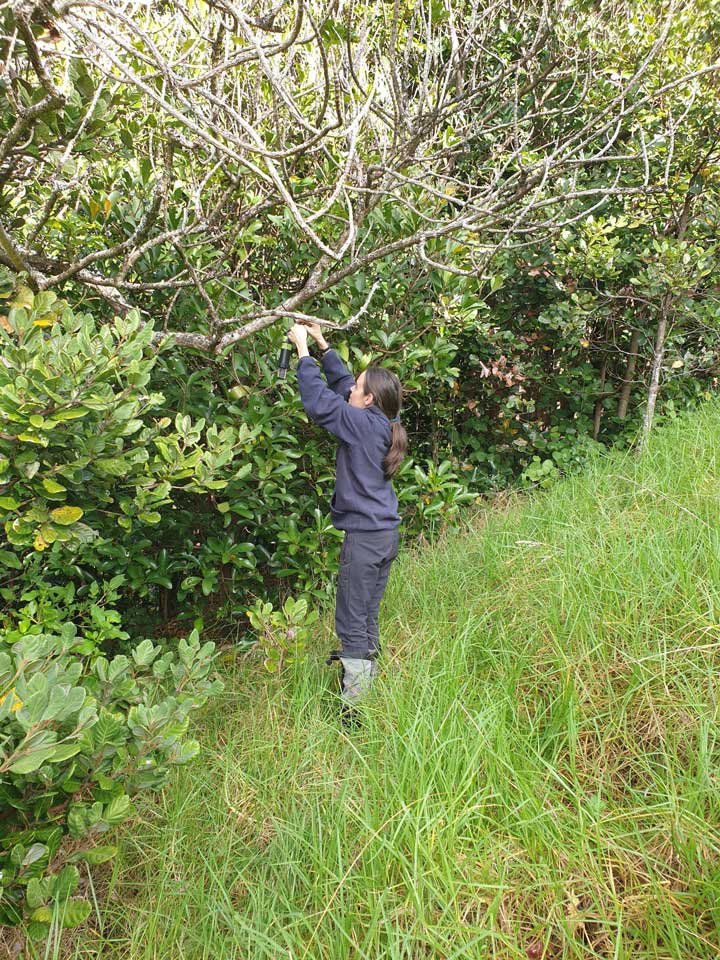
One of the key projects is a detailed bat survey at the Tamahunga Ecological Area, aimed at understanding whether long-tailed bats are present, where they are most active, and how they use the landscape.
Led by The Forest Bridge Trust ecologist Virginia Moreno, the survey uses 40 automatic bat recorders. These devices are deployed in the field for a minimum of 14 days and detect the ultrasonic calls bats make as they fly and forage.
Recorders are placed both around the edges of Tamahunga, including on privately owned land and within the interior of the DOC reserve. Sites are carefully chosen to target forest edges, clearings, and stream corridors, which are key areas for bat activity.
Surveys are carried out during the breeding season (November–December) and repeated at the end of the season (February), when bats may change how they use available habitat. The results will help us understand if bats are present, where they are concentrated, and which areas are most important for their survival.
Supporting community awareness and bat protection
The second project focuses on community-led bat awareness and protection across the Rodney District. This work aims to build local knowledge and long-term monitoring by:
- Working with communities to survey for bats and establish local bat monitoring projects
- Upskilling community groups in the use of automatic bat recorders and survey methods
- Increasing knowledge of bat distribution across Rodney, including areas that have had little previous survey effort
By empowering communities with the tools and skills to monitor bats, this project helps build a clearer picture of where pekapeka are living and how best to protect them.
About pekapeka tou-roa (long-tailed bats)
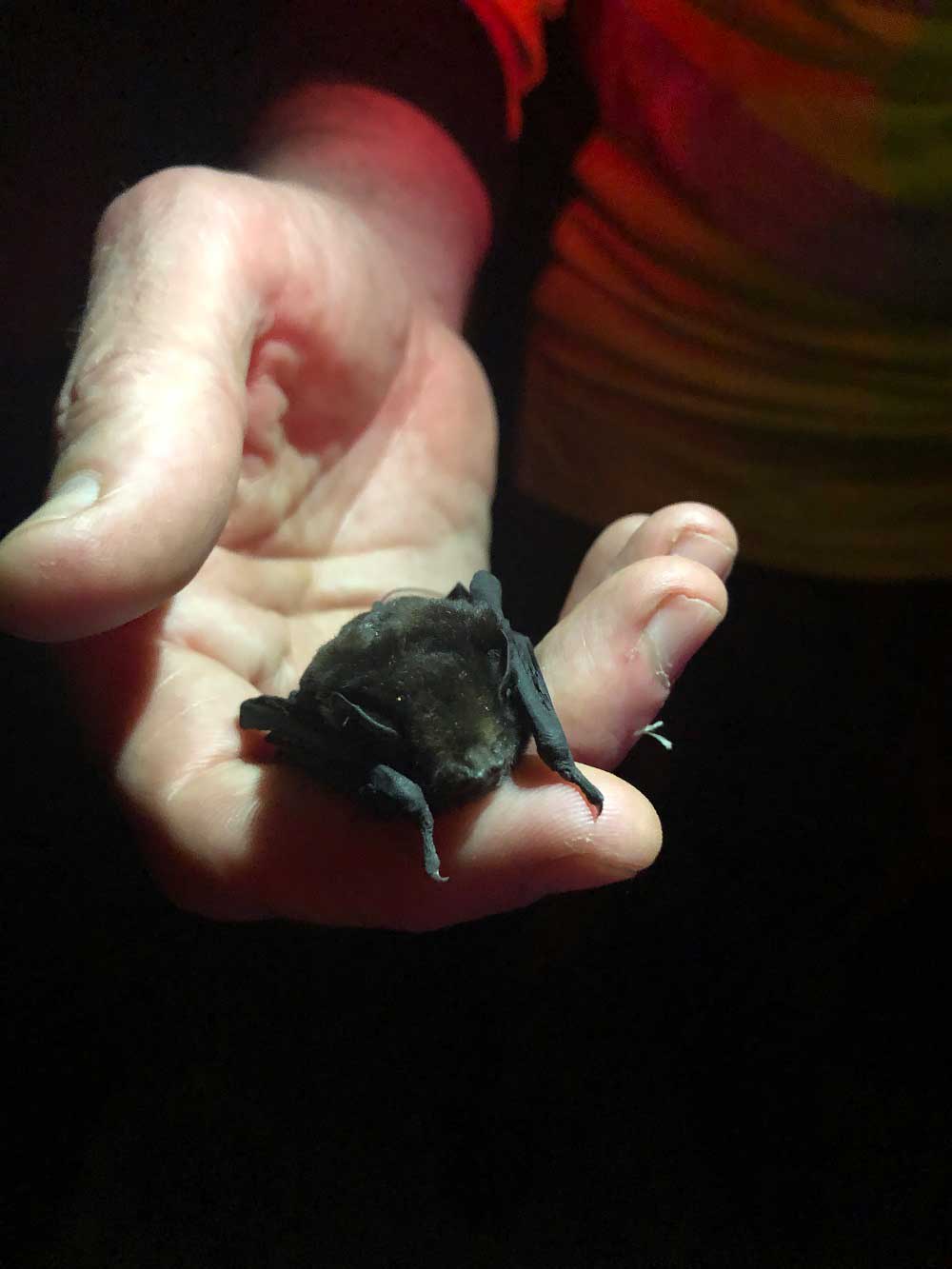
Photo by Ben Paris
Pekapeka tou-roa (Chalinolobus tuberculatus) are one of only two native land mammal species found in Aotearoa New Zealand. Endemic to New Zealand, they are classified as Nationally Critical under the New Zealand Threat Classification System.
They are threatened by the loss of critical habitat — particularly old-growth trees used for roosting — as well as predation from introduced mammals such as mustelids, cats, and dogs.
While long-tailed bats are found across both the North and South Islands, occupying habitats from native forest to rural and some urban areas, very little is known about their population size and long-term trends. Recent increases in research and monitoring are helping to build a better understanding of their movements, behaviour, and habitat needs.
Pekapeka in Rodney and Tamahunga
Pekapeka are known to occur in the northern Auckland region, including the Rodney District. They have been detected at scattered locations and appear to be more commonly recorded around large forest remnants such as Riverhead Forest and Dome Forest. However, this may reflect where survey effort has historically been focused, as many areas remain under-surveyed.
Mount Tamahunga and the surrounding Tamahunga Ecological Area are among the places where little recent information exists about bat populations. This high-value conservation area includes both DOC land and private properties, together providing important habitat features, including remaining old-growth trees that are vital for bat roosting.
Through research, community engagement, and habitat protection, the Rodney Pekapeka Project is helping to fill important knowledge gaps and support the long-term survival of one of Aotearoa’s most threatened and fascinating native species.