

Networking at the Cutting EdgeSanctuaries of NZ Inc (SONZI) Conference August 2021
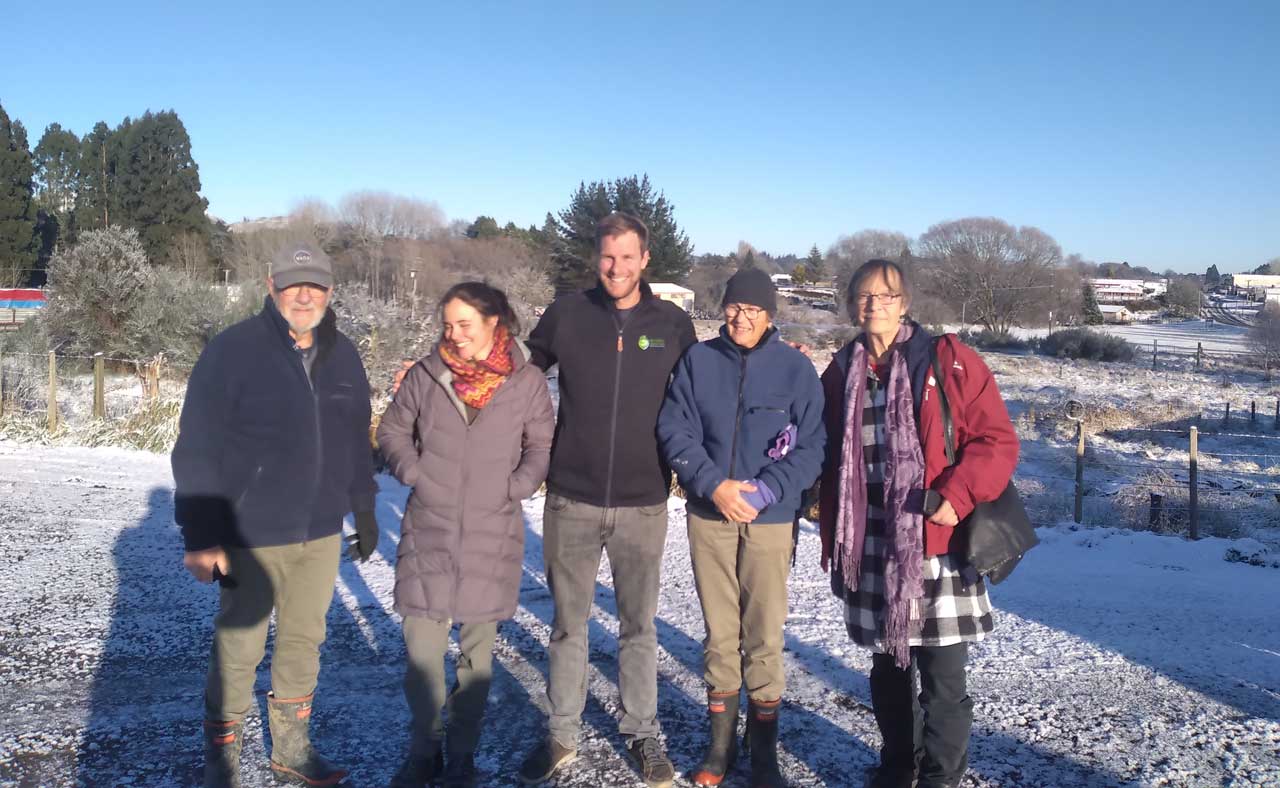 From left: Kevin Adshead (Chair), Virginia Moreno (TFBT ecologist), Cam Rathe (TFBT Senior Predator Control Advisor), Gill Adshead (Trustee), Maj De Poorter (TFBT Operations Manager)
Just a week before NZ went into Level 4 lockdown, five of us from TFBT left the warm sub-tropical weather of North Rodney, and drove through a snowy dark night to attend the Annual Sanctuaries of NZ Inc meeting at Raetihi on the North Island central plateau.
The theme for the workshop was Iwi and Conservation and our amazing hosts were the Uenuku Charitable Trust with Sanctuaries of NZ Inc. (SONZI).
There was a great mix of attendees from all over NZ including volunteers, landowners, conservation practitioners, scientists, government agencies, NGOs, students and local iwi (Uenuku) of all ages. This provided a great networking atmosphere and valuable opportunities to brainstorm with like-minded folk on what works in practice. There were many inspiring examples and success stories from around the motu illustrating the real life positive impacts of predator control and habitat restoration. These kiwi can-do reminders were a great antidote to the many doom and gloom stories about on the state of decline of our native habitats and species.
The first day we had a series of science talks, innovative good stuff, too many to list here, but some learnings that we want to share include:
- Difficult to catch predators:
- Not all predator individuals behave the same way: some have different “personalities” that mean they are easier or harder to catch.
- When trapping has been carried out for a while, the last remaining ones have a higher probability of being trap-shy or “too smart” in other ways and hence they can be much harder to get.
- We need to outsmart them by understanding them (“think like a predator”) and by applying different approaches, baits, methods etc.
- Weka as complex predators:
- Weka sometimes have a bad reputation because they predate some of the native species we are trying to protect. But, on the other hand, they are part of the natural native ecosystem balance and play a key role in seed dispersal (e.g. many Hinau seeds in 1 poo).
- What do our bats need?
- The scale for bat conservation (their home ranges) is usually much greater than the scale of fenced/managed sanctuaries. We need a landscape-level approach.
- ld trees should be conserved as they provide essential roosting habitat.
- Feral cats on Farms:
- Feral cats have variable home ranges, some small but also some very big.
- They use forest fragments more than pasture; this means that landscape connectivity might also improve cat habitat connectivity and dispersal.
On the second day, we had a great presentation from Uenuku about their iwi whakapapa and their vision for the new proposed fenced eco-sanctuary “Pokaka”. They are trying to rescue traditions and tribal knowledge (they made Hinau seed bread for Matariki for the first time in almost a century), as well as taonga species such as kiwi and Whio. This iwi-led fenced sanctuary could be a model for others and combines environmental and social aspirations: to give iwi a sense of ownership and restore connection to the land, bring back native species, and provide jobs that will allow those that moved away to return to Raetihi.
In the afternoon, we heard short presentations from many of the sanctuaries and projects attending the meeting. It was great to see all the progress but also good to share the challenges and difficulties encountered along the way. There were many examples of kiwi ingenuity and collaboration. Some interesting notes:
- Shakespeare Regional Park has been dealing with a stoat incursion. There has been great support from Auckland Council innovation team to develop new solutions. They built stoat “playgrounds” with disguised traps. One of the most important tools has been the use of a detector dog.
- Trail cameras are being used increasingly for successful predator detection.
- 70% of stoats die off each year due to natural causes.
- Animals have been shown to associate danger with trap sites not necessarily the traps at that site.
- Non-metal trap mesh may work better than steel as stoats possibly shy away from the metal that is colder than the surrounding habitat.
- Hazing traps was making them more effective and rounded off straight edges to make them look more natural.
- Hollow logs were used to good effect for catching trap shy stoats.
- Covering the centre of double-ended cage traps made them more effective on feral cats. A possible explanation is that to check out bait properly they need to enter the trap.
- Using stuffed toys with cat/ ferret/ stoat pee was very effective. They held the smell well and created a visual oddity for predators to want to check out.
- Possums use vegetation features to move across open pasture much like stoats do
- Possums can have home ranges of as little as 0.6ha and as big as 40 ha.
On our final day, we had a field trip visit to the proposed Pokaka sanctuary. We didn’t venture too deep into the bush, but it was enough to see the amazing old-growth forest and incredible biodiversity. We believe this will be a unique project with lots of potential to bring Raetihi into the conservation spotlight. With a really passionate team behind the project, we have no doubt this will be the case, and we look forward to visiting this sanctuary in the not-too-distant future. In the meanwhile, we are back home with our cups full, knowing that groups all over the country are sharing the same journey bringing back our native species and habitats and that there will always be a friendly space where we can share and learn. Looking forward to next year’s meeting!
If you would like to know more about SONZI and the meeting, talks are now available online: https://www.sanctuariesnz.org/meetings/SONZWorkshop2021.asp.
Thank you to Auckland Council for funding the costs of registration and accommodation for our 3 staff.