

Meet Volunteer Coordinator Elena Siun and learn how you can help The Forest Bridge Trust protect native wildlife.
If you have volunteered with The Forest Bridge Trust you will most likely have met our lovely Volunteer Coordinator Elena Siun. Elena, originally from Russia, has worked all around the world and has enjoyed many volunteer roles. She has a keen interest in gardening, medicinal plants and a holistic approach to health and wellness and enjoys the great outdoors. Elena knows just how rewarding volunteering can be, not only providing a sense of purpose and an opportunity to give back to the community, but volunteering is a great way to meet new people, learn new skills and work collectively with others to achieve a shared goal. “Volunteering is great for your wellbeing”, says Elena “I would encourage anyone with spare time on their hands to explore the many groups in the area seeking help. You could have exactly the skills that a particular group is looking for or you might have the opportunity to learn something new, either way, your help will be appreciated and will make a difference. There will be lots of groups and charities at the “Find out about Volunteering Open Day” on Saturday, 24 June at the Matakana Hall, so a great chance to pop in and find out how you might be able to lend a hand.
Elena took the time to answer a few questions about her role at The Forest Bridge Trust and talk about what Trust volunteers do.
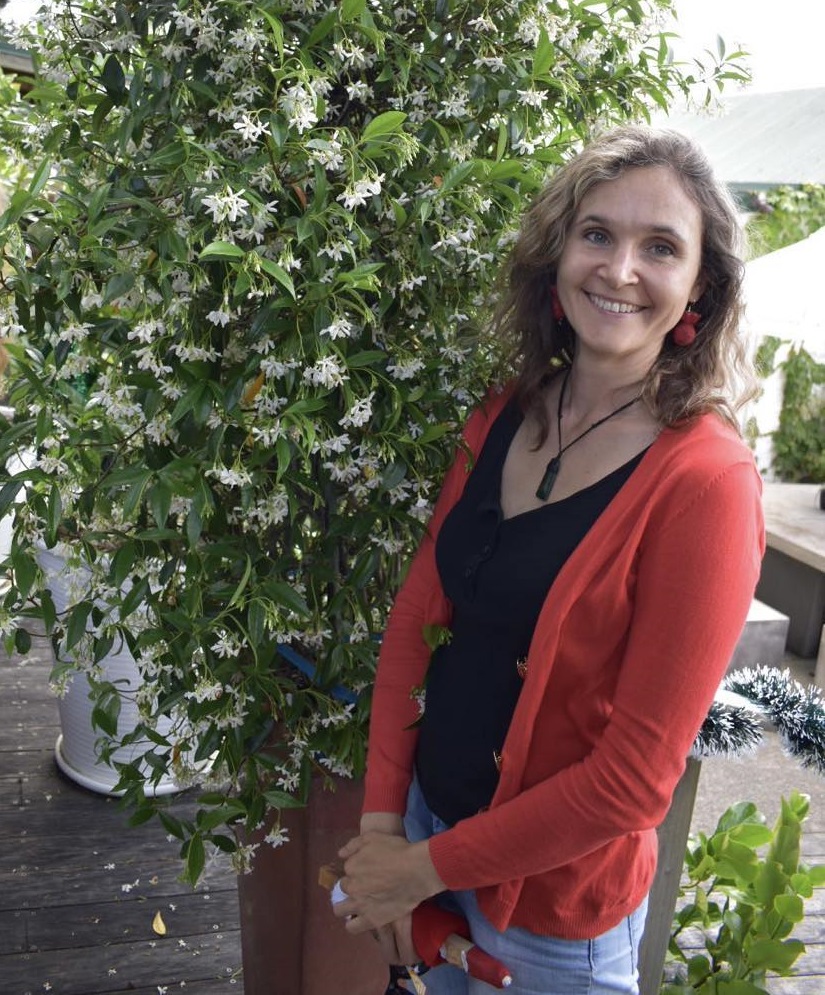
How long have you been The Forest Bridge Trust’s Volunteer Coordinator?
I joined the Trust almost a year ago. Before this I had been volunteering in different nurseries and teaching gardens for 5 years – since I landed in NZ.
What do you enjoy most about volunteering?
The unique flora and fauna I see whilst out volunteering. For me, conservation volunteering simply provides an opportunity to give something back, to help and use my skills, for the benefit of environmental projects. Volunteering demonstrates that I can walk the walk, not just talk the talk.
What is your favourite Trap line?
Dunn’s Bush near Puhoi and the area around Tamahunga, as they are the most challenging. Monitoring a the trapline is also good for physical health, most of the people who attend to those lines mention that they appreciate the steep terrain and cannot find any similar in their neighbourhood.
What jobs can you volunteer to help with at The Forest Bridge Trust?
The most popular roles are Community Trapping and Trail Camera checking. We also have many people interested in helping with bird call & bat monitoring and Trail Camera footage reading. However, this involves a bit of training. There are also volunteers helping us with admin tasks, planting, graphic design and even photography / videography. There’s something for everyone to get involved with.
What is involved with checking a trap line?
Walking the trapline, checking and resetting traps, changing bait and reporting catch and surveillance data using a web-based database Trap.nz
How many hours are required?
Monitoring a trapline can take anywhere between 2 to 6 hours, depending on the number of traps and the location and terrain of the trapline. Volunteers have the freedom to choose when they go out to monitor their trapline, although most volunteers tend to check their traps fortnightly or monthly. Each trapline has a team of volunteers who work on a roster.
What training are volunteers given?
Volunteers are required to attend a training session/walk where we speak about introduced predators such as possums, rats and mustelids and their impact on all levels of the ecosystem by preventing forest regeneration, and predating on native wildlife thus pushing many species towards extinction. We teach volunteers how to monitor and service the traps, change the bait and report data so they later can manage these traplines independently.
Where do volunteers check traplines?
We have many different locations across the Forest Bridge area, so it’s really up to where you live or the area you prefer to volunteer with us.
Do you check traplines on your own or in a group?
Volunteers have the freedom to choose whether to work, on their own or with a group. We provide all the training, and you can invite your family members or friends to join. You can be buddied up with someone more experienced, to begin with. It often happens that people start to attend to the trapline in a group and once confident, they move to solo trapping.
Can you volunteer with work colleagues?
We are open to collaboration with local businesses. Volunteering is a great way to reinvigorate your team, get your hands dirty and give back to nature and the community. Corporate volunteering is not about ticking boxes in corporate social responsibility, it is fun team building that delivers tangible positive outcomes both for the organization and the environment. You can choose to adopt a trapline, to share the roster among the company team or ask us to host a working bee day for your business. Big things have small beginnings, your team may not be ready for a long-term commitment, but you can do your small part for the environment. Half-day or full-day volunteering could be a good start.
Are there any physical restrictions for volunteering? How fit do you need to be?
We have a range of ways for people to contribute depending on their physical ability. Our trap-lines are graded from easy to difficult so volunteers can choose one they feel comfortable maintaining. We also need support for less physical tasks, such as admin support and trail camera footage monitoring.
Why do people Volunteer? What are the benefits?
Some volunteers may be motivated to connect to a caring community or learn about conservation through hands-on experience. Others may volunteer as they feel the work undertaken will benefit the wildlife. Most often I hear people say that volunteering provides them with a sense of purpose, and a sense of community and brings joy into their life.
Can one volunteer make a difference?
Absolutely! Even helping with the smallest tasks can make a real difference to the natural environment.
What advice would you give someone who is thinking about volunteering but isn’t sure if they should commit to a project?
The Greek philosopher Aristotle once said that the essence of life is “to serve others and do good,” and it seems an increasing number of us are starting to wake up and see why volunteering is important. The more we give, the happier we feel. People are starting to understand how serving and helping each other and the community benefits not just others but ourselves, too.