
Growing Kiwi Populations in the Tāwharanui Buffer Zone2025 Monitoring Results
The Forest Bridge Trust’s latest kiwi monitoring results from the Tāwharanui buffer zone show promising signs of a growing and thriving kiwi population beyond the predator-proof fence. Between May and July 2025, our Senior Ecologist, Dr. Virginia Moreno, led a comprehensive kiwi call monitoring survey to better understand how North Island brown kiwi are dispersing and breeding across the buffer zone surrounding Tāwharanui Regional Park.
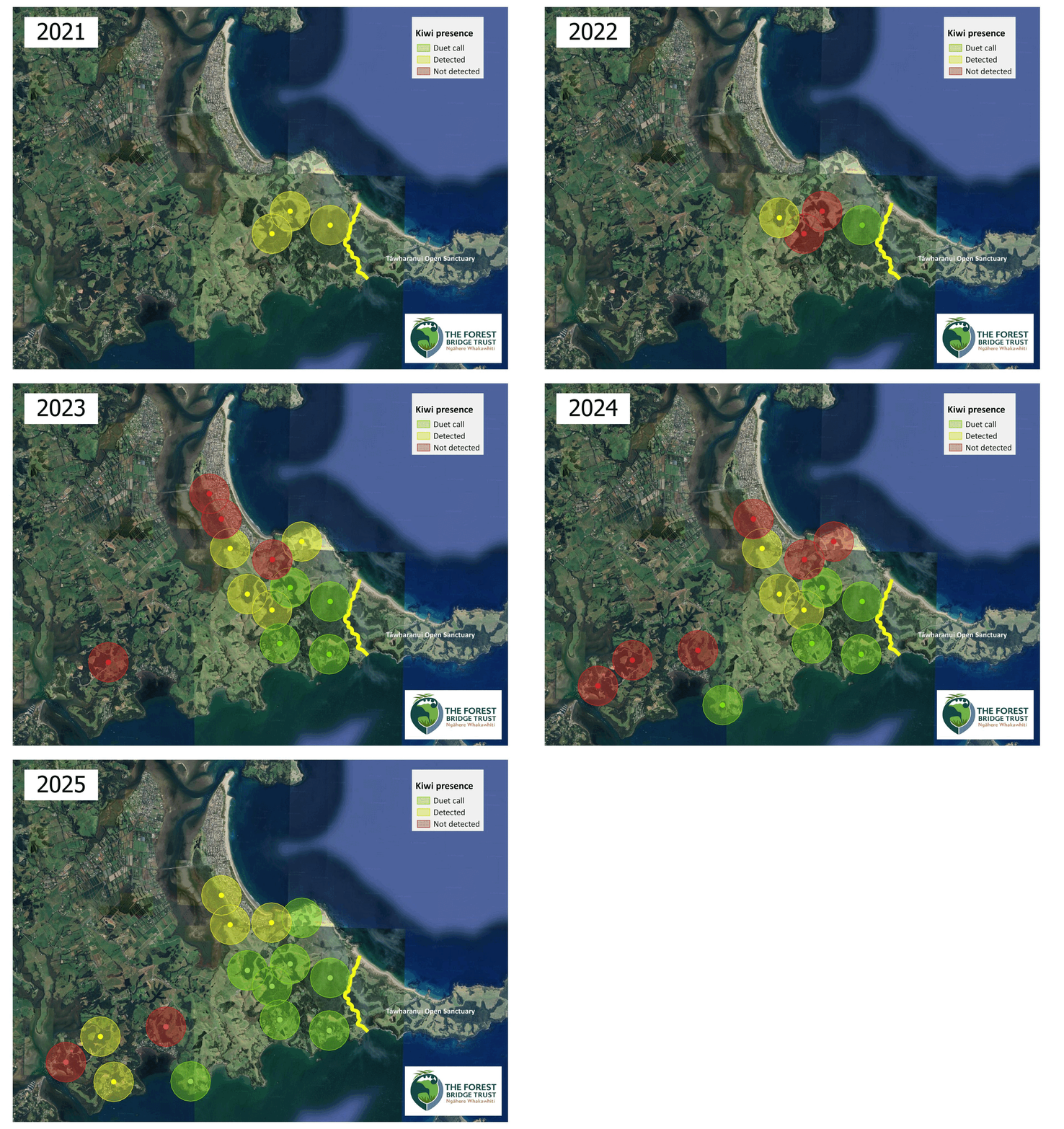
Key highlights from the 2025 kiwi monitoring programme include:
- 15 audio recorders deployed across the buffer zone, spanning 500 metres to 7.2 kilometres beyond the predator-proof fence.
- 87% of sites recorded kiwi calls, a rise from 57% in 2024.
- 13 out of 15 monitored sites detected kiwi activity — an impressive indicator of range expansion.
- Duet calls (male and female calling together) were heard at 8 sites (53%), up from 5 sites last year, suggesting active breeding pairs.
- Kiwi presence recorded at Sites 6, 10, and 12 for the first time in three years.
The monitoring employed a systematic approach: 10 sites were surveyed during the primary kiwi call monitoring window (May 16 to June 3), with an additional 5 sites surveyed in a backup window (June 14 to July 3). Each acoustic recorder operated for six hours nightly from 6 pm to midnight, the time when kiwi are most vocal.
These positive results demonstrate the resilience of kiwi populations and the vital role of ongoing predator control, habitat protection, and community collaboration in supporting their recovery. The detection of more duet calls is especially encouraging, as it indicates successful breeding and the establishment of territorial pairs in areas beyond the sanctuary’s predator-proof fence.
Kiwi dispersing and breeding beyond Tāwharanui’s protected core means that the landscape-scale predator control network is working, giving kiwi the chance to reclaim their ancestral habitats.
Why does this matter?
- Kiwi are a taonga species (treasured species) for Aotearoa New Zealand.
- Their recovery is a measure of how healthy and resilient our ecosystems are.
- Community-led conservation efforts make a real difference to their survival.
Thanks to Save the Kiwi who supported Dr Moreno’s study.
The Forest Bridge Trust is proud to support ongoing monitoring and predator control in partnership with local communities, mana whenua, Auckland Council, and DOC. Together, we are creating a safe corridor for kiwi to thrive across the wider landscape.
Nikki Morgan