
Connecting People and Kiwi ConservationReflections from the 2026 Kiwi Hui
The Forest Bridge Trust Conservation Manager, Matu Booth, recently joined more than 170 conservationists, researchers, iwi representatives, community groups and kiwi advocates at the 2026 Kiwi Hui in Nelson.
The hui brought together people from across Aotearoa to share learnings, celebrate successes and discuss the future of kiwi conservation. Among those attending were Forest Bridge Trust founders and trustees Kevin and Gill Adshead, continuing their long-standing commitment to protecting native species and supporting conservation collaboration.
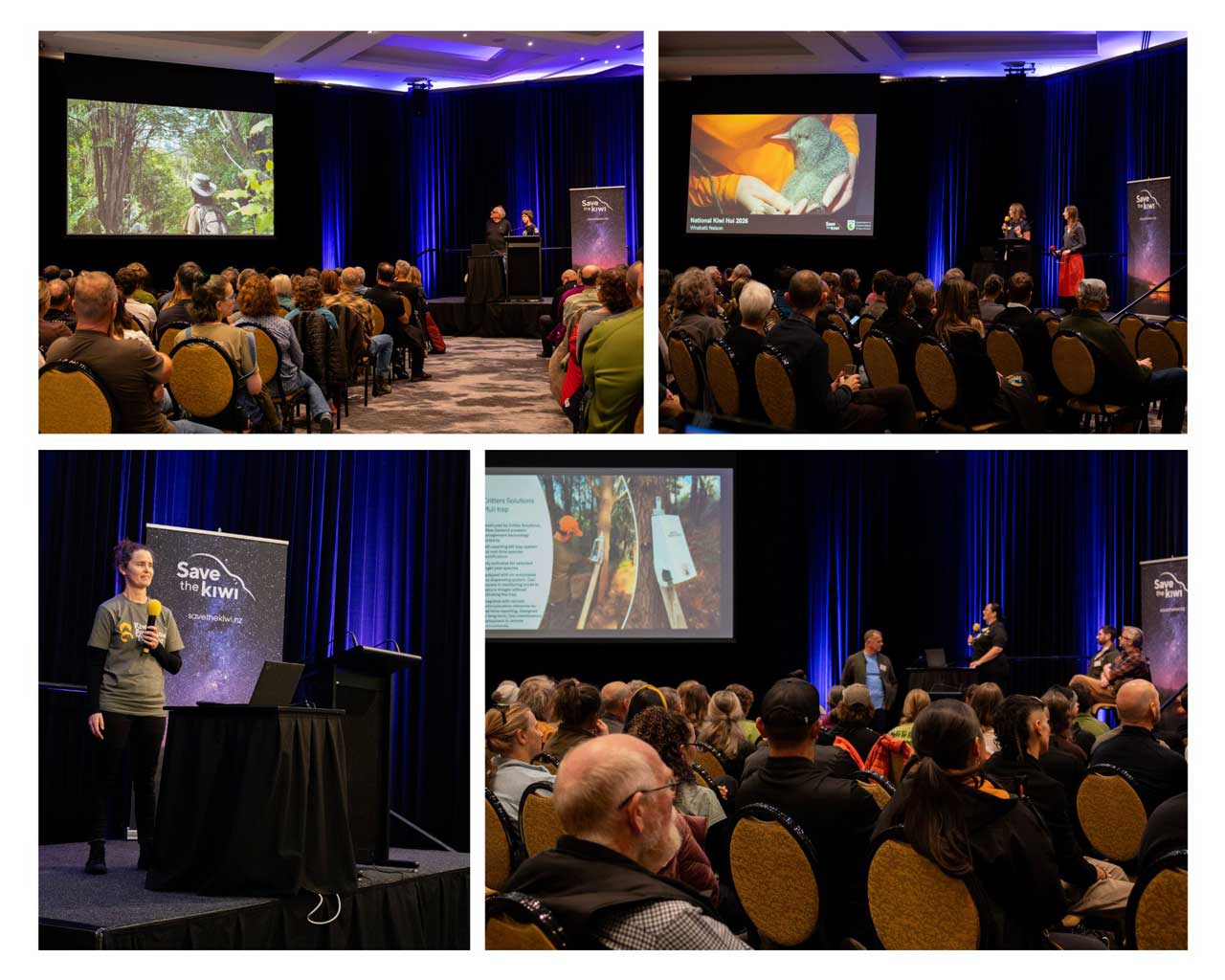
With the Jobs for Nature-funded projects now completed, this year’s hui marked a return to updates on the rarer kiwi species, advances in tools, toxins and monitoring, and specific topics such as preparing for the arrival of avian influenza from the perspective of kiwi.
A recurring theme was the challenges and advantages of integrating AI traps and technology into various landscape-scale projects. One of the sessions took the form of a panel discussion involving representatives from three such projects, Predator Free Banks Peninsula, Southern Lakes Sanctuary and Korehāhā Whakahau, describing their experience.
One of the surprise highlights was hearing from Taane Mills, the youngest ever keynote speaker at a Kiwi Hui, just 14 years old, who presented his Saving Whio project based in Ōtuwhero River in the Tasman/Nelson region. Although not kiwi focussed, his entrepreneurial talent and commitment was a ray of hope and enthusiasm which all attendees were impressed by.
Chris McCormack, CEO of the Brook Waimārama Sanctuary in Nelson, spoke about their kiwi had provided an iconic touchpoint for financial support when the Sanctuary fence was breached in storms early in 2026. Attendees were able to enjoy a night-walk in the Sanctuary as one of the Hui offerings.
Other key presentations included updates on the recent rediscovery of kiwi pukupuku / little spotted kiwi which was thought to be extinct on the mainland for nearly 50 years. It gives hope for increasing the genetic security of the population which is based on just 5 founder birds.
Updates on the two rarest species, Haast tokoeka, and Rowi were also positive stories – with both species now numbering over 500 individuals. Equally inspiring was the presentation from Save the Kiwi’s Tineke Joustra which detailed how kiwi translocations have increased dramatically over the last 5 years.
An inspiring presentation came from a retired Nelson vet, Inge Bolt, who has volunteered hundreds of hours monitoring great spotted kiwi, or roroa (Apteryx haastii). Using GIS mapping tools and call data-set, she has increased provided valuable insights into their movements and known distribution.
The use of camera data as a way of tracking pest indices was mentioned in several presentations. The interpretation on camera monitoring is evolving and becoming increasingly important in evaluating the success of landscape-scale 1080 operations.
There was a timely update on DOC’s preparations for the arrival of Avian bird flu and specifically how it might impact on kiwi and kiwi conservation. Although this strain of the known as the H5N1 virus has been circulating since 2021 it has not yet reached our shores. DOC wildlife vet, Rachel Stanyer reminded the attendees it was a matter of when not if it will and with news this week of the first reported deaths among Australian seabirds her presentation was particularly sobering.
For Matu, the 2026 Kiwi Hui was a valuable opportunity to reconnect with the wider kiwi conservation community, hear about new approaches and share knowledge with others working towards a predator-free future.