
South Head: Community in Action for WildlifeUpdate February 2026
Across South Head, a quiet but powerful conservation story is unfolding, one driven by local landowners, residents, and conservation partners working together to protect this special landscape.
Over the past few months, there has been steady and encouraging progress as practical action on the ground continues across wetlands, dunes and estuarine margins. These habitats are home to some of Aotearoa’s most vulnerable native species, and the collective efforts of the South Head community are helping ensure they have a future here.
When the Forest Bridge Trust team recently visited the area, Conservation Project Manager Helen Jamieson shared just how much impact this growing network of community-led conservation is having.
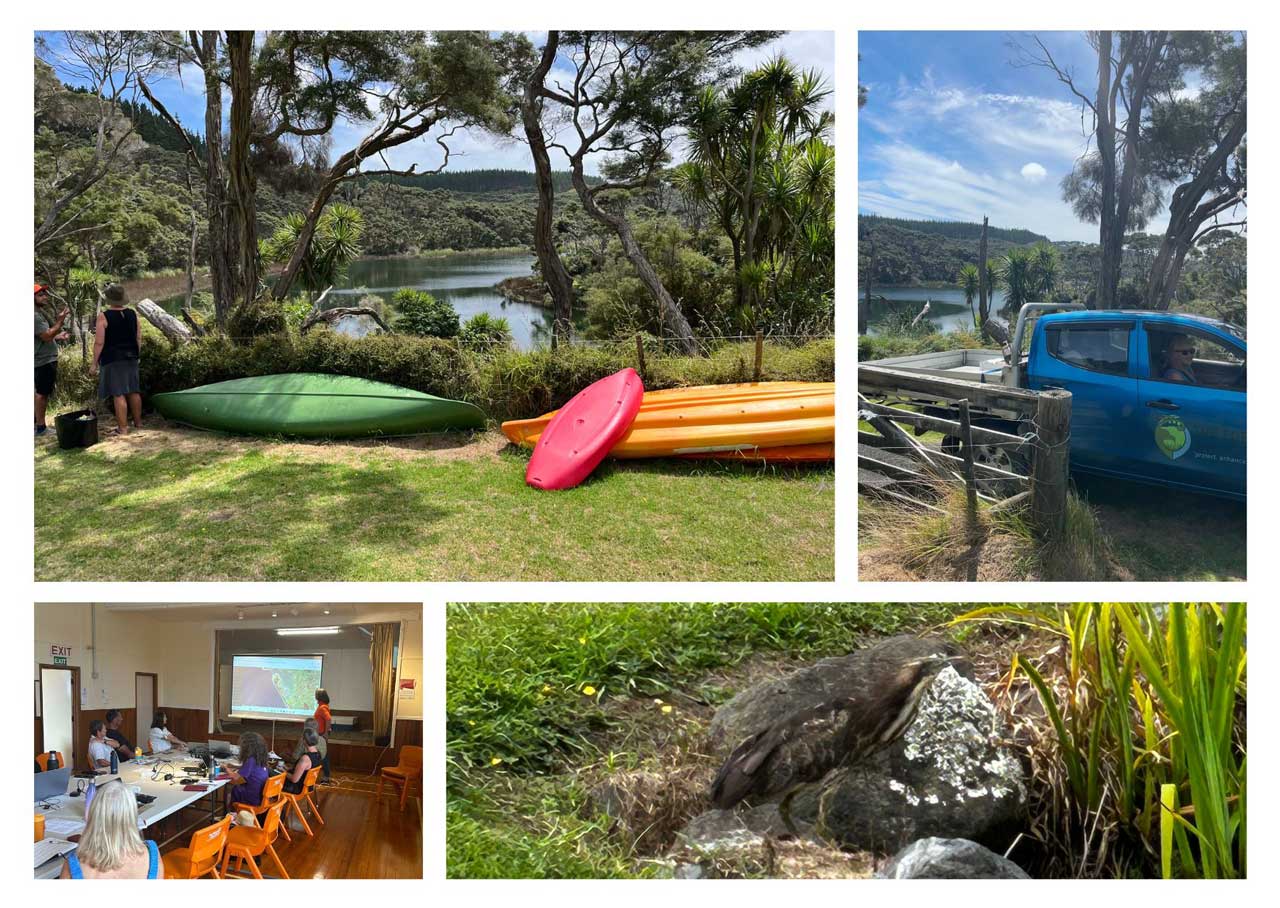
South Head’s wetlands remain vital strongholds for matuku hūrepo / Australasian bittern, while the nearby coastline and estuarine edges provide important breeding habitat for tara iti / New Zealand fairy tern.
Supporting these species requires sustained effort. Since July last year, The Forest Bridge Trust pest control team deployed more than 500 traps across the landscape, helping create safer habitat for both wetland and coastal wildlife.
The protection of tara iti at South Head has been led by the Department of Conservation for many years. This season brought particularly encouraging news, with three tara iti fledglings successfully raised, a significant milestone for one of the rarest shorebirds in the world. The Forest Bridge Trust is proud to support this work by helping local landowners strengthen predator control across surrounding properties.
While matuku hūrepo can still be seen and heard regularly in South Head wetlands, their situation elsewhere in Aotearoa is far more precarious. The species is now considered critically endangered, making places like South Head especially important.
As Helen reflects:
“We may well be the last generation able to save the bittern from extinction in New Zealand, and the actions of South Head residents could have a big impact on increasing their numbers.”
This is what community conservation looks like, local knowledge, care for the land, and practical action, supported by science and collaboration.
The Forest Bridge Trust would like to acknowledge the ongoing mahi of Department of Conservation – Auckland, and the guidance and collaboration of South Kaipara Landcare, alongside the many South Head landowners and residents who are stepping up to protect these taonga species.
South Head landowners — keen to get involved?
If you would like to learn more about pest control, trapping, or how you can be part of the mahi, please get in touch:
- Heather Steadman Community Liaison – South Head
- Heather@theforestbridgetrust.org.nz
- 022 161 8979
We are also planning an upcoming opportunity for the South Head community to hear from Dr Virginia Moreno, who will share insights on pāteke, tara iti and matuku hūrepo, including the latest bittern survey results and conservation work underway in the area.
5 May — South Head (venue to be confirmed)
More details will be shared soon.
Together, the South Head community is showing how local action can make a real difference for some of Aotearoa’s most threatened wildlife.