
Spotlight on the Matuku hūrepoSouth Head Workshop
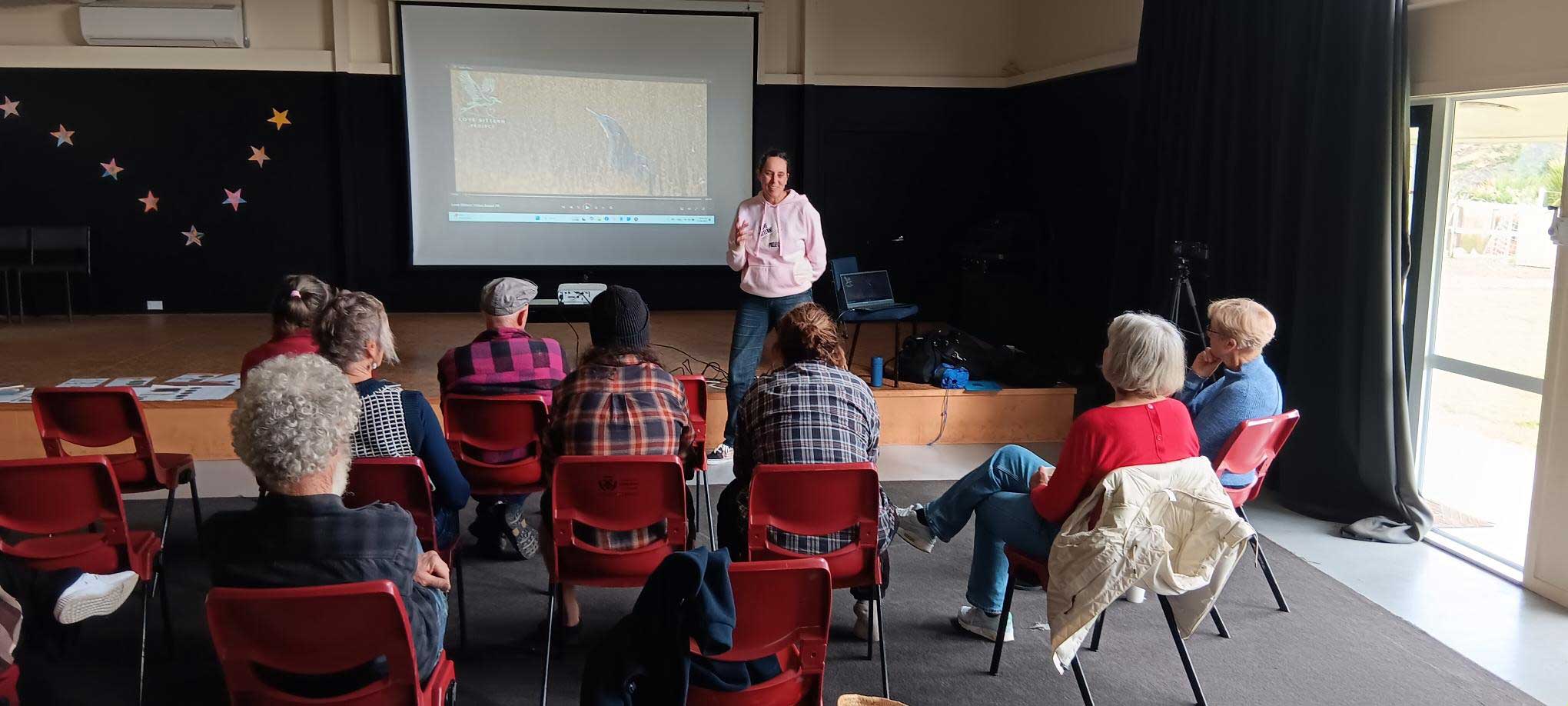
On a recent sunny weekend in South Head, local conservationists gathered to learn about one of Aotearoa’s most mysterious and threatened taonga: the Matuku hūrepo (Australasian bittern). The workshop was organised by South Head Conservation Manager Helen Jamieson in partnership with Project700 and The Forest Bridge Trust, with support from Auckland Council and DOC.
The day was led by Wendy Ambury from the Love Bittern Project, who shared her knowledge and passion with the enthusiastic group. Wendy spoke about the elusive nature of the Matuku hūrepo, the dangers it faces, and the actions we can take to support its survival — from effective predator trapping and monitoring to restoring vital wetland habitats.
The challenges facing hūrepo
With wetlands being destroyed at a rapid pace nationwide, Matuku hūrepo are increasingly found struggling to survive. Starvation forces them to travel long distances in search of small wetland fragments, often burning more energy than they can gain from scarce food.
Instead of thriving on tuna and whitebait in wetland habitats, hūrepo are now resorting to alternative prey such as skinks along roadsides. This adaptation comes with harsh consequences: their natural “freeze reflex” — an excellent defence against aerial predators — makes them highly vulnerable to speeding cars and terrestrial predators like cats, stoats, and ferrets.
Citizen science in action
The workshop also introduced the group to the upcoming Great Matuku Muster, a nationwide citizen science initiative that will play a crucial role in understanding and protecting the species. As Wendy reminded us, “At the current rate of population decline, we are the last generation of people who can save Bittern in their natural wetland homes.”
A call to action
This workshop was an inspiring reminder that protecting wetlands and the species that depend on them requires collective effort. By working together, communities can play a vital role in giving these extraordinary birds a future. And with the Bird of the Year competition starting this September, we hope everyone will consider giving one of their votes to the Matuku hūrepo — raising its profile and reminding New Zealanders why wetland protection matters.