
Coming Together for ConservationA Celebration at Ranfurly Hall, Kaipara Flats
On Sunday, Ranfurly Hall in Kaipara Flats was alive with energy, community spirit — and a deep love for nature.
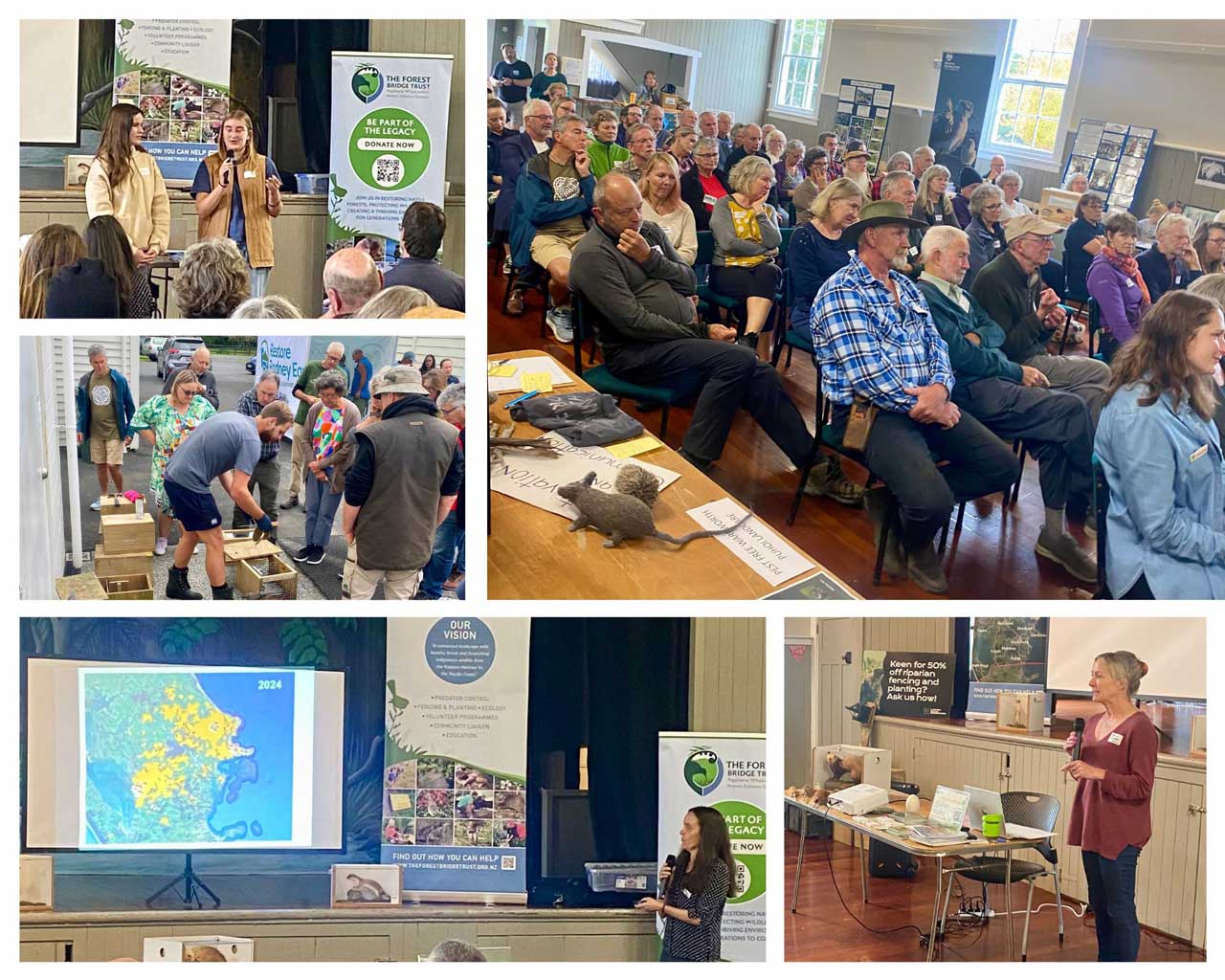
The Forest Bridge Trust Trapping whānau gathered to mark an important moment: the conclusion of our Jobs for Nature chapter, which officially ends on 30 June. It was a chance to reflect on the mahi we’ve achieved together, acknowledge the change ahead, and celebrate the people and places that have made this journey so special.
Milestones Worth Celebrating
One highlight was revisiting the incredible kiwi translocations to Maunga Tamahunga in collaboration with the Tamahunga Trappers. Ecologist Virginia Moreno also took us on a visual journey, sharing compelling data that shows a steady increase in kiwi populations across our region — a powerful reminder that our collective efforts are working.
Voices of the Next Generation
One of the most moving moments came from two Mahurangi College students, who bravely shared their personal conservation journeys. Guided by local trapper Colin Binstead, they spoke about the ethical questions they faced around predator control and how they came to understand that removing pests supports the survival of native wildlife. Their honesty, curiosity, and commitment left many of us inspired.
Conservation on the Farm
We also heard from Nicola Murray, a local dairy farmer who described herself as a “light green conservationist.” After three years working alongside Alex from our predator control team, Nicola has noticed a real change — the return of birdsong to her property. She’s now continuing the work through a monthly Trap Maintenance Partnership with The Forest Bridge Trust, ensuring the momentum keeps building.
Knowledge Sharing Over Kai
While we all enjoyed a sausage sizzle for lunch, Cam and Alex from our predator control team led an informative trapping workshop, covering FAQs and tips on the many trap types used by our conservation community. From stoats and ferrets to rats, possums, and feral cats — they shared practical advice to help ensure every trapline is as effective as possible.
Strength in Community
Local conservation community groups also joined us for the day, setting up stalls to share updates on the amazing mahi they’re doing and letting people know how to get involved. It was great to see connections made, ideas exchanged, and a shared sense of purpose grow stronger.
A Shared Journey
He waka eke noa – we’re all in this together.
From community conservation groups to individual landowners and volunteers, everyone has played a vital role. The success of this programme belongs to you all.
We also want to extend a heartfelt thank you to Auckland Council for their continued support, and to our amazing Community Liaison team — Tris, Karen, Claire, and Helen — for organising events like these throughout the Jobs for Nature period. You’ve helped bring people together, build knowledge, and create a legacy of care for our native taonga.
As we look toward the future, one thing is clear: community-led conservation is alive and thriving in north Auckland.